

The anti-AI movement is not a single organisation. The label covers different forms of refusal, protest and negotiation over generative AI, including training on creative works, replication of voices and likenesses, creative labour and platform rules. Specific demands matter: opposing a particular use is different from rejecting all AI.
 View full image ↗
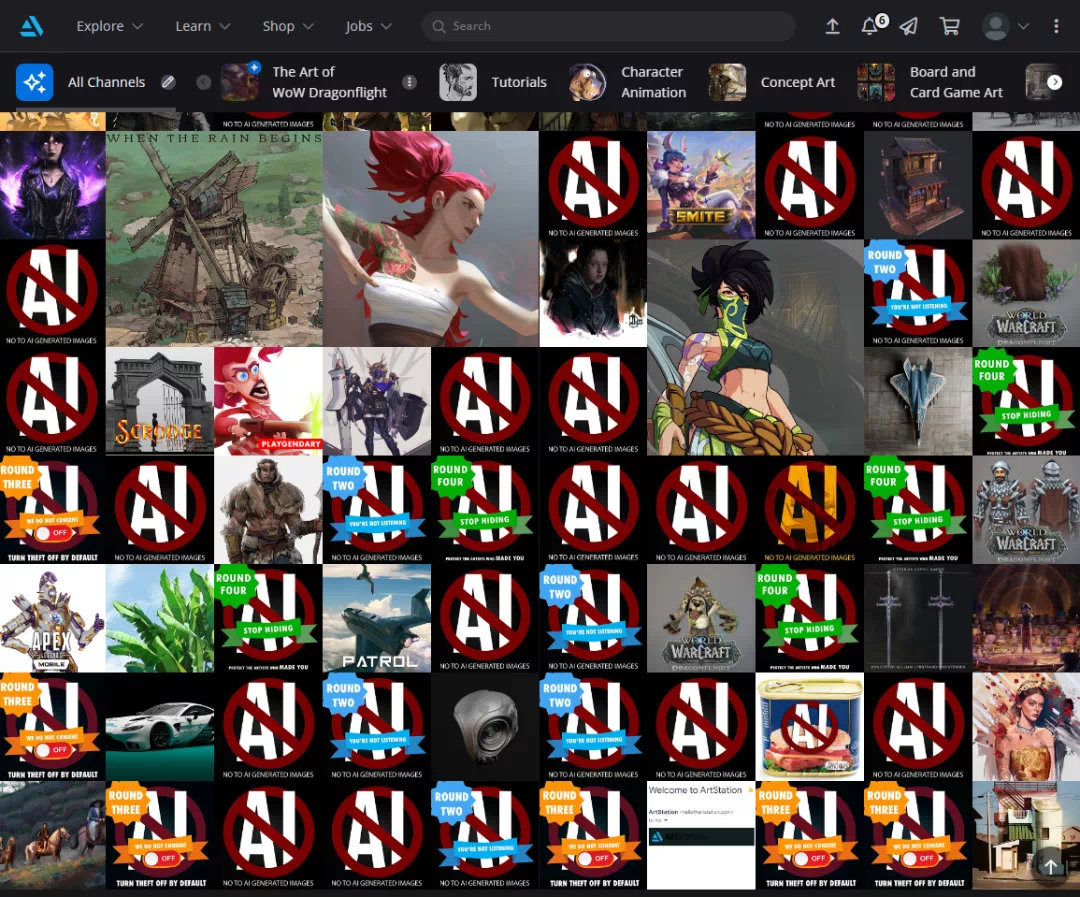
The anti-AI movement on ArtStation. Reproduced in Chen Haohao’s 2023 commentary.
Rights retained by original creators; reproduction source: Chen Haohao’s 2023 commentary
Source · Disco and AI: Is the Movement Against AI a New Luddism? ↗What do participants oppose?
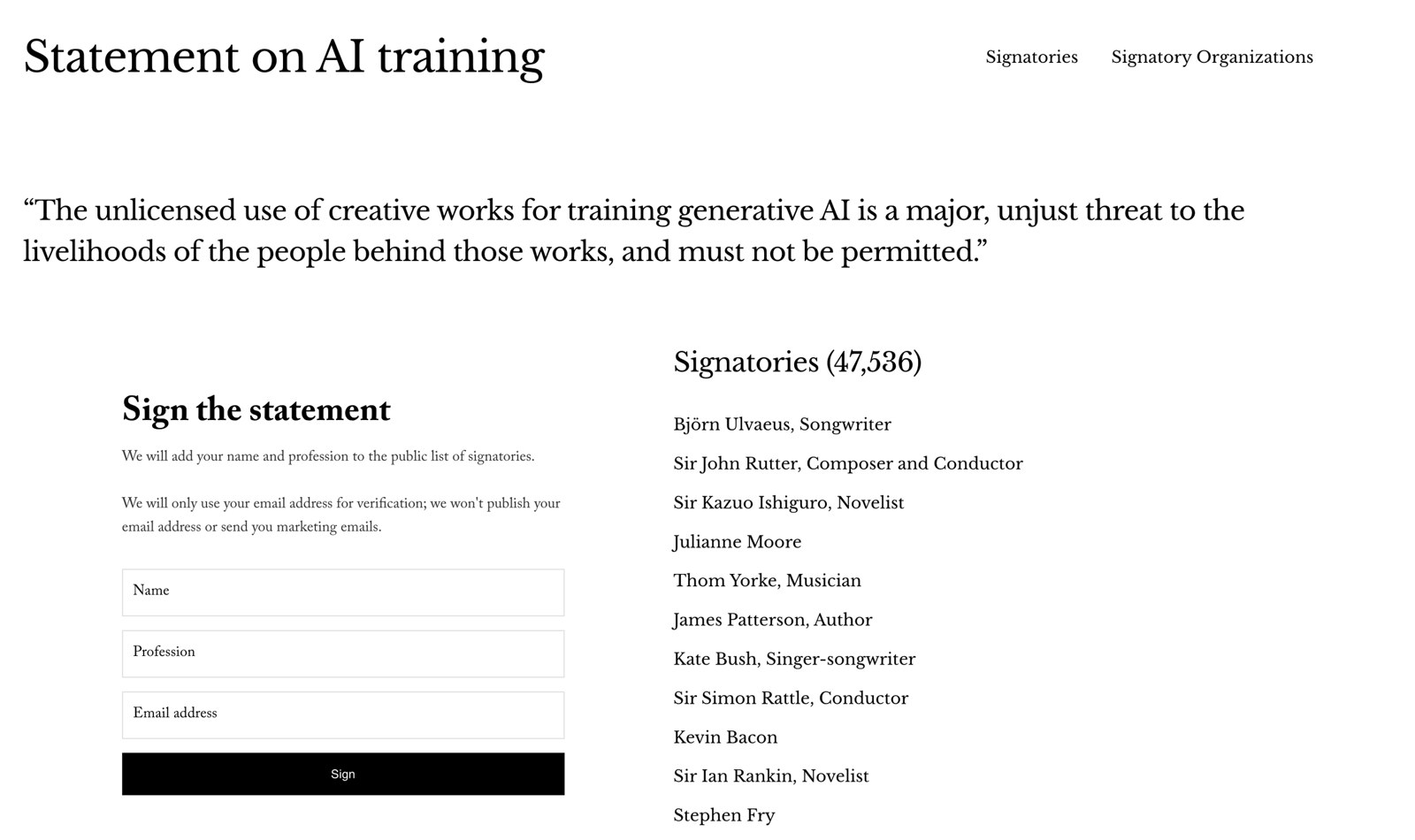
The Statement on AI Training opposes unlicensed use of creative work. This demand addresses a use of material; it does not establish every signatory’s views on every AI application. Procreate, by contrast, publicly rules out introducing generative AI into its products. These positions concern different decisions: conditions for using creative work and the direction of an artistic tool. Treating both as fear of technology obscures who controls the decision, whose work is involved and what remains negotiable.
ArtStation and NoAI: contesting platform rules
On 16 December 2022, ArtStation announced NoAI tagging and a terms-of-service change allowing users to state that work must not be used for AI training. The date establishes the platform announcement, not the first protest or its initiator. Training permissions, publication and search filters are separate questions: filtering generated images is not a platform-wide ban, and a tag does not demonstrate that scraping or training has stopped. The case connects later announcements with earlier materials while retaining gaps in the evidence for the protest’s beginnings.
Video-game performers: from protest to bargaining
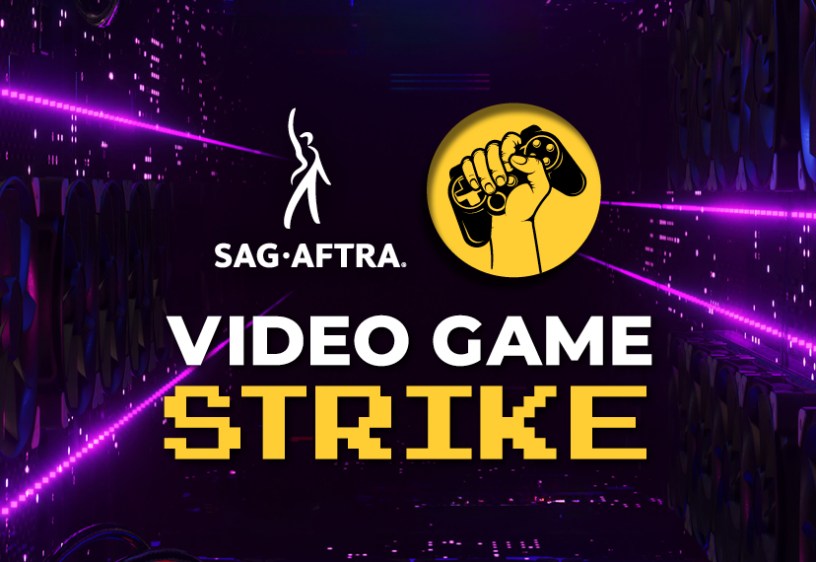
SAG-AFTRA’s account dated 16 August 2024 records a video-game strike announced on 25 July and effective on 26 July. It identifies consent, compensation and transparency for digital replicas and synthetic performances as demands. This shifts the question from whether a generated image counts as art to who may replicate a performance, under what conditions, and how workers bargain collectively. The statement documents the union’s demands and action; it is not a judicial finding against employers. Agreements, ratification and implementation must also be checked separately.
How should different places and stages be compared?
The archive’s main period for anti-AI movements begins in 2022; this is a research boundary, not a claim that criticism of technology began then. An editorial comparison can follow four strands: creative work and training data; bodies and performance labour; platform rules for visibility and use; and organising and licensing negotiations. These are ways to organise evidence, not categories endorsed by every participant. Brazilian dubbing, Japanese voice-rights campaigns and European or US organisations require attention to their own languages, institutions and media. Earlier computational and generative practices are explored separately in AI Art History.
How to use the archive
Start with a case below and compare statements, agreements, platform responses and other sources by event date. Original links let readers check what participants actually said; Chinese and English accounts locate material, explain relationships and preserve uncertainty. A complaint is not a judgment, a policy promise is not an implementation result, and an archive’s record count is not the size of a movement. This is a revisable research guide based on the listed materials. Its bilingual text is AI-assisted and awaits independent human review; source reading and independent verification of historical claims remain separate.
Related cases & evidence
These cases provide material for comparison and verification; no single source substantiates every claim in the guide.
ArtStation / NoAI ↗
This batch includes platform announcements on NoAI, content filtering, and anti-scraping measures; the protest’s beginning still requires evidence.
View full image ↗The anti-AI movement on ArtStation. Reproduced in Chen Haohao’s 2023 commentary.
Rights retained by original creators; reproduction source: Chen Haohao’s 2023 commentary
Source · Disco and AI: Is the Movement Against AI a New Luddism? ↗Statement on AI Training / Cross-disciplinary sign-on against unlicensed training ↗
Research is ongoing; collected events do not constitute a complete case history.
 View full image ↗
Image published with “Statement on AI training — Ed Newton-Rex”. Its creation date is not inferred from the event date in this record.
Image source: Ed Newton-Rex; rights remain with the original rights holders.
Source · Statement on AI training — Ed Newton-Rex ↗SAG-AFTRA / Video-game performers’ labour dispute ↗
Collected events and documents are linked in the timeline; the case history remains under research.
 View full image ↗
SAG-AFTRA video game performers’ strike graphic, July 2024, preserved in contemporaneous coverage by 2x2.media.
SAG-AFTRA; reproduction source: 2x2.media
Source · SAG-AFTRA begins a strike against video game companies ↗Brazil’s Dublagem Viva / Dubbing and AI regulation ↗
Collected events and documents are linked in the timeline; the case history remains under research.
 View full image ↗
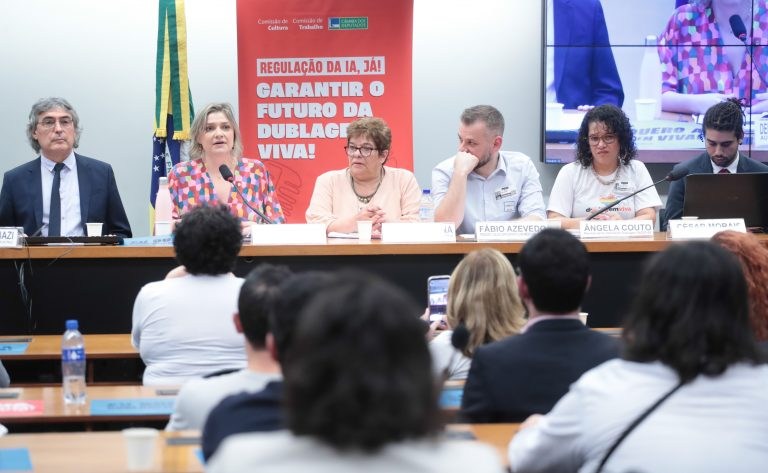
Public hearing on AI regulation in dubbing at Brazil’s Chamber of Deputies, 29 August 2024. Photograph by Bruno Spada.
Bruno Spada / Câmara dos Deputados
Source · Dubbing workers call for protection against unauthorised AI voice use ↗NOMORE Unauthorized Generative AI / Japanese voice actors’ video campaign ↗
Collected events and documents are linked in the timeline; the case history remains under research.
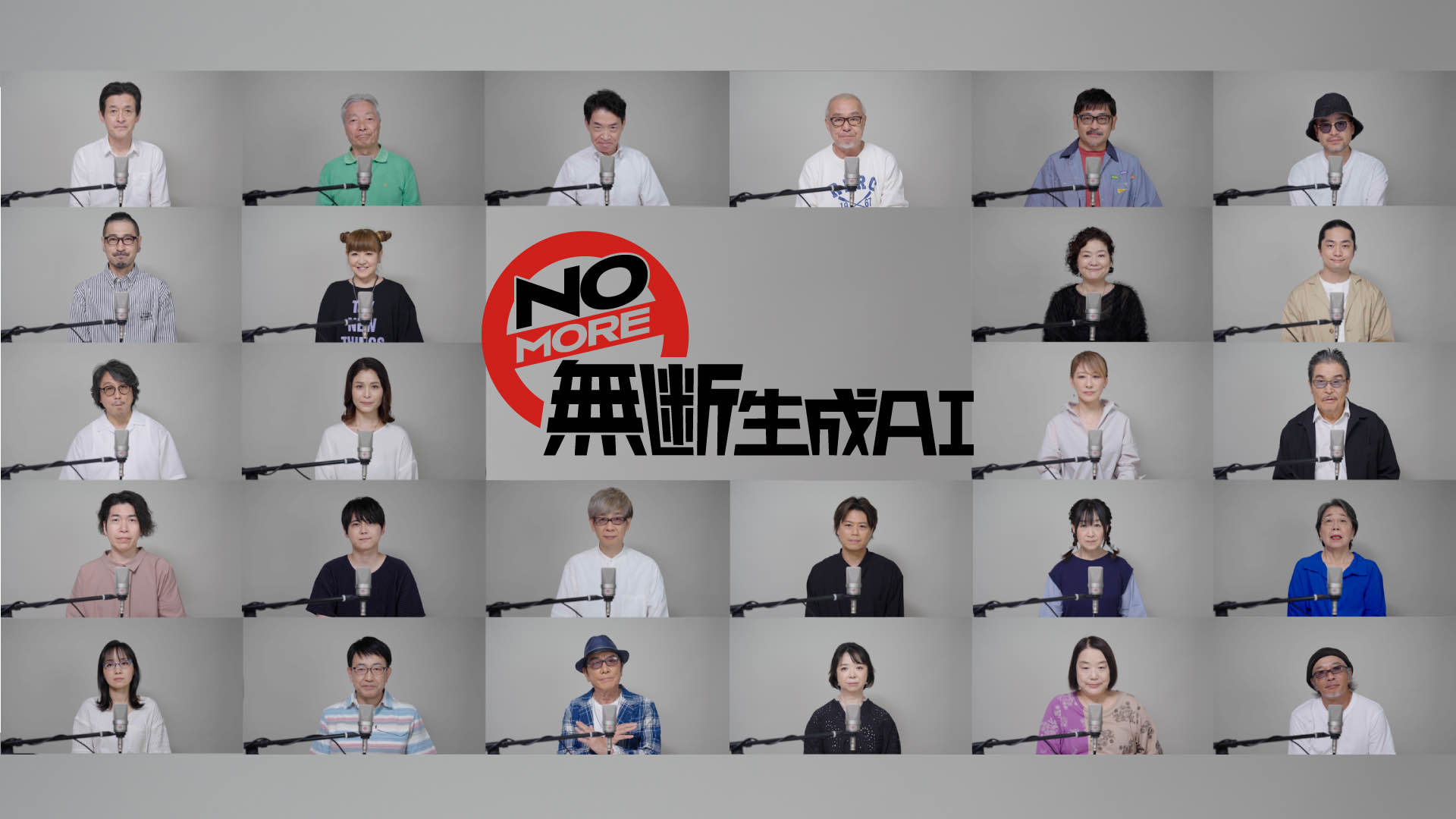 View full image ↗
A montage of participating voice performers published on the NOMORE Unauthorised Generative AI campaign website.
NOMORE Unauthorised Generative AI campaign; rights retained by source
Source · NOMORE Unauthorised Generative AI campaign ↗Glaze / Defensive tool for artists ↗
Collected events and documents are linked in the timeline; the case history remains under research.
 View full image ↗
A work by Karla Ortiz shown on the Glaze project website as a Glazed example.
© Karla Ortiz; source: University of Chicago Glaze project
Source · Glaze: project description and examples ↗Nightshade / Defensive tool for creators ↗
Collected events and documents are linked in the timeline; the case history remains under research.
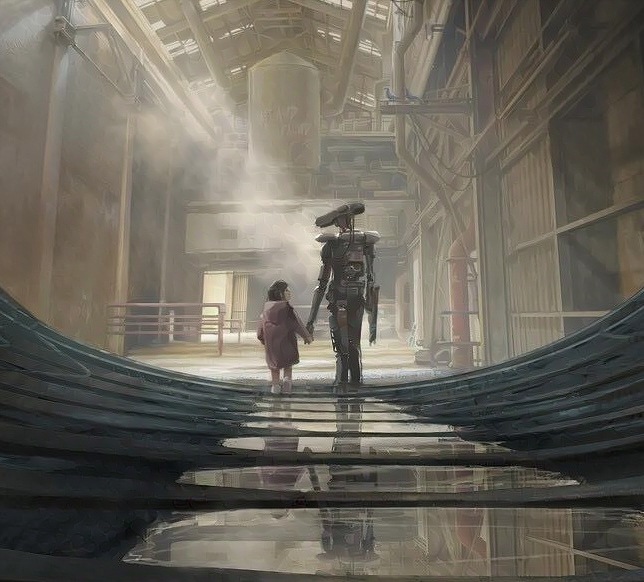 View full image ↗
A treated work by Yujin Choo displayed as an example on the Nightshade project website.
© Yujin Choo; source: University of Chicago Nightshade project
Source · Nightshade: project description and examples ↗Procreate / Statement against introducing generative AI ↗
Research is ongoing; collected events do not constitute a complete case history.
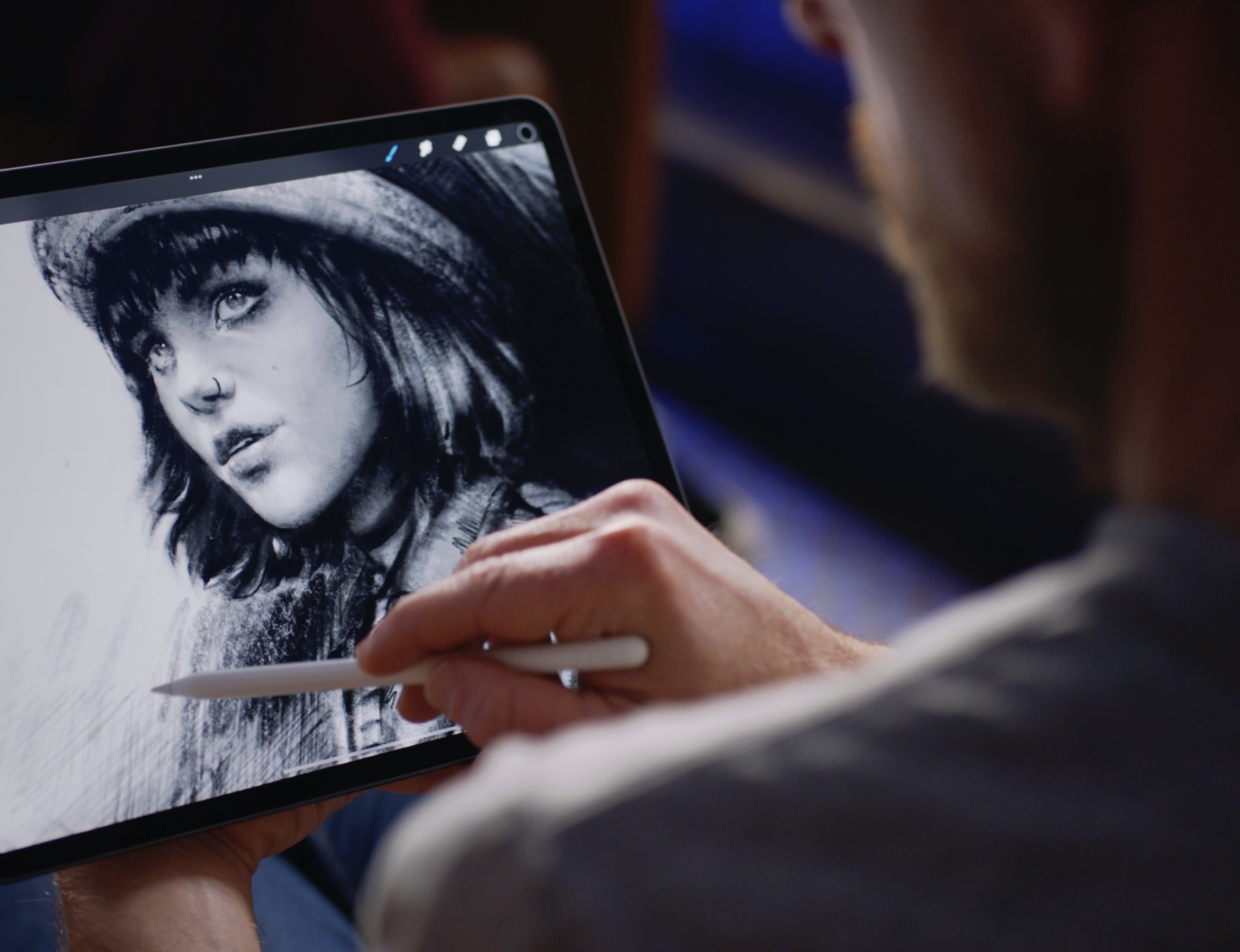 View full image ↗
An image of digital drawing from Procreate’s statement against introducing generative AI.
Procreate / Savage Interactive; rights retained by source
Source · Procreate’s position on AI ↗IMPF and IMPEL publish principles for fair generative-AI licensing ↗
On 30 September 2026, IMPF and IMPEL proposed principles for generative-AI music licensing. They distinguish payments for past uses, training, generated outputs and future exploitation, and call for rightsholder involvement in scope and valuation. This is an industry negotiating framework, not a concluded collective licence or a statutory tariff.
 View full image ↗
Title area of page 1 of the IMPF and IMPEL joint statement, 30 September 2026. Cropped from the original PDF; lettering is unchanged.
IMPF / IMPEL; official original document
Source · Joint Statement: IMPEL and IMPF on Fair Licensing for Generative AI ↗Third Circuit affirms the ROSS copyright and fair-use ruling ↗
In case 25-2153, the Third Circuit affirmed the copyright and fair-use ruling concerning 2,243 Westlaw headnotes. The opinion records a filing date of 29 September 2026; the court’s public list records the case on 30 September. The dispute concerns protected summaries used for a competing legal-search system. The ROSS system at issue was not generative AI.
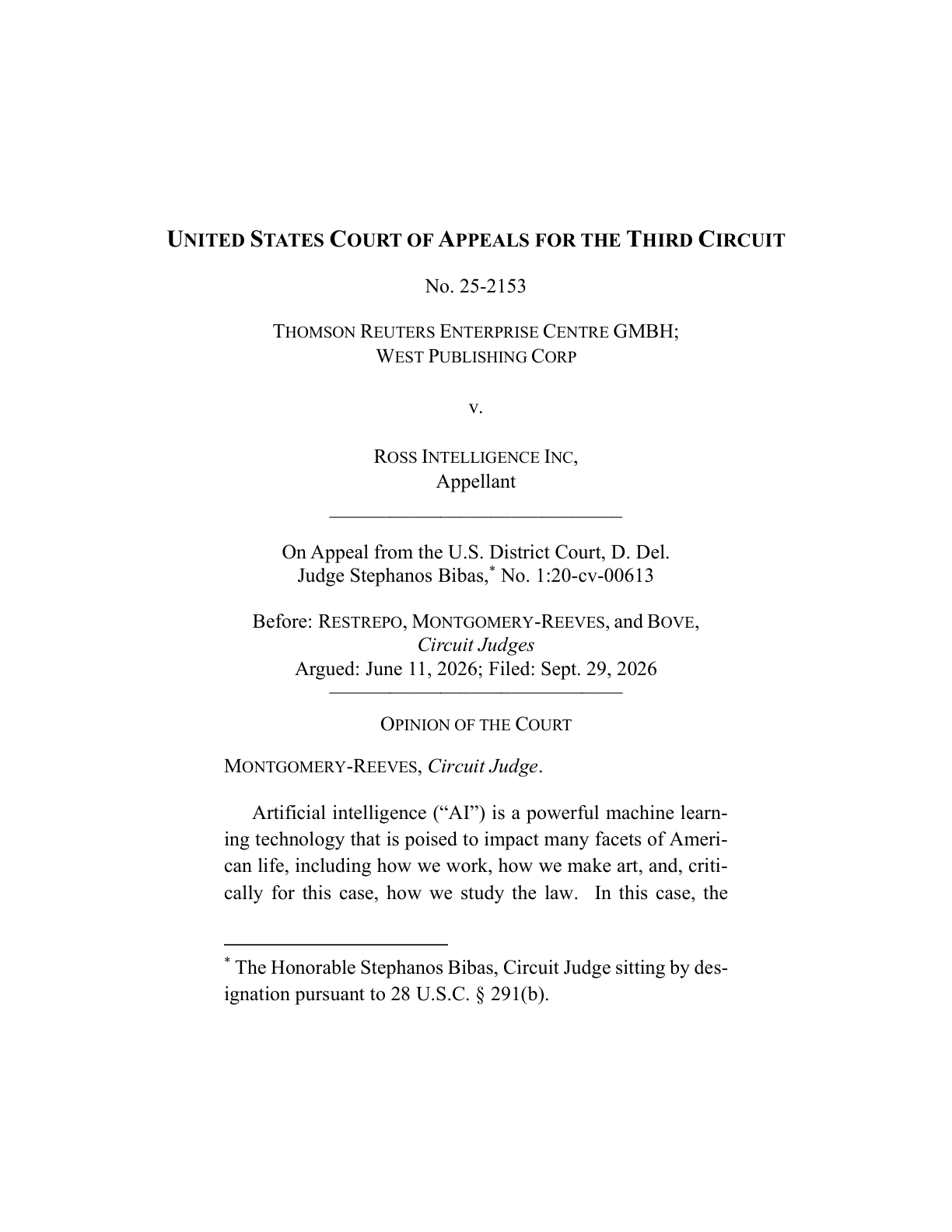 View full image ↗
First page of the Third Circuit opinion in the ROSS appeal, No. 25-2153, filed 29 September 2026.
United States Court of Appeals for the Third Circuit; official original document
Source · Thomson Reuters Enterprise Centre GMBH; West Publishing Corp v. Ross Intelligence Inc., No. 25-2153 ↗Original sources
Câmara dos Deputados · PT
Read original source ↗Câmara dos Deputados · PT
Read original source ↗Volunteer voice actors’ group · JA
Read original source ↗Glaze research team / USENIX · EN
Read original source ↗Shawn Shan and others / arXiv · EN
Read original source ↗United States Court of Appeals for the Third Circuit · EN
Read original source ↗United States Court of Appeals for the Third Circuit · EN
Read original source ↗This research guide is written by the archive. Its Chinese and English texts may include AI-assisted translations and may not yet have received independent human review. Check historical claims and rights information against the original-language sources.
Citation & methodology
This topic is a selection and reading path, not an exhaustive history. Cite the relevant record and original source for specific claims. To cite this guide, give its title, URL and access date.
ANTI-AI ARCHIVE. What is the anti-AI movement? Demands, actions and historical evidence. https://salondesrefuses.cn/en/topics/culture-governance/guides/anti-ai-movements
Methodology & citation ↗