

The archive provides Chinese and English research texts. Translations may be AI-assisted and may not yet have received independent human review. Consult the original-language sources alongside them.
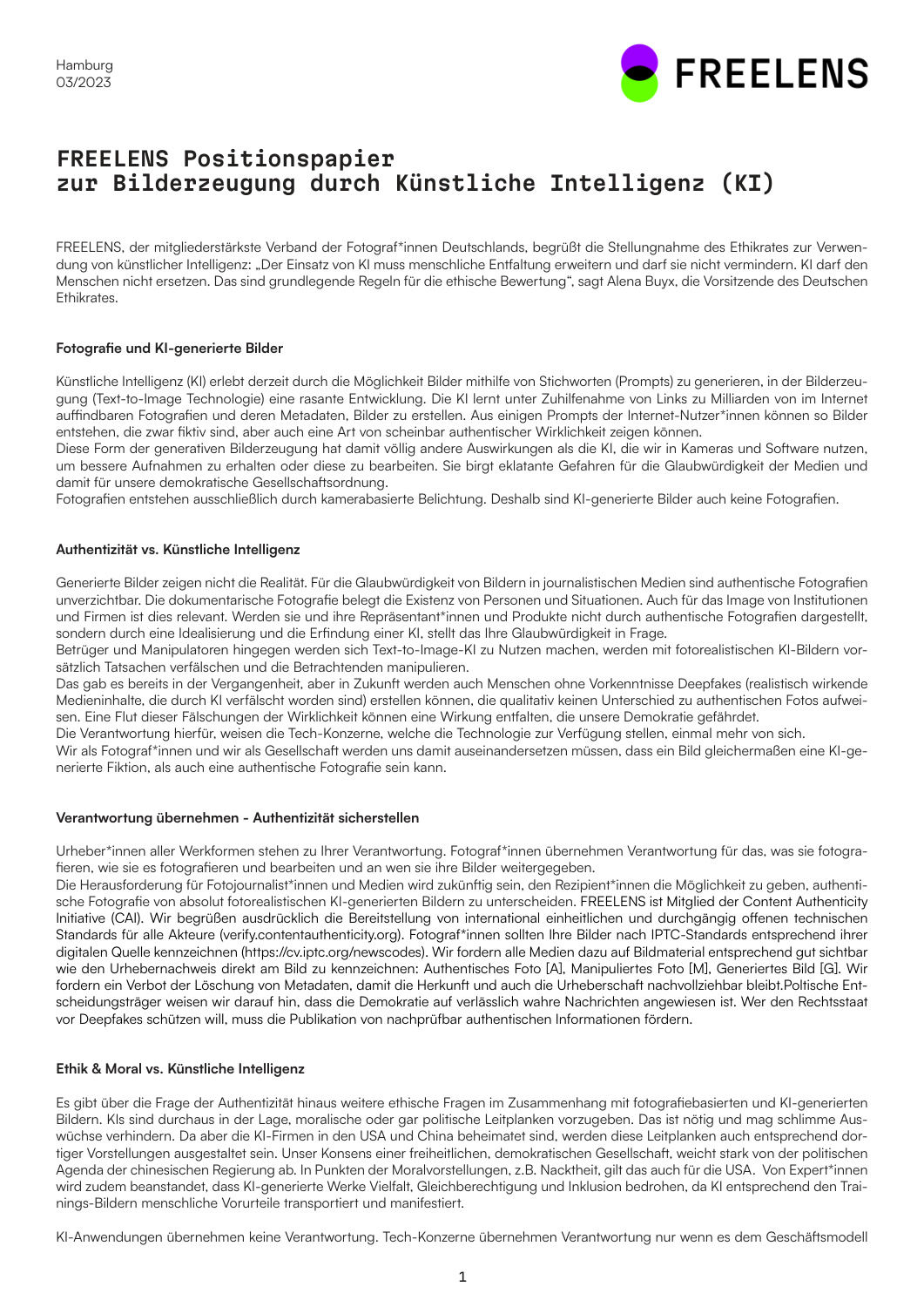
FREELENS proposed distinctions between authentic photographs, modified photographs, and generated images, using A/M/G labels and preserved metadata, and required permission and fair remuneration for training uses of works.
 View full image ↗
Opening page of the source document associated with “FREELENS position paper on image generation through artificial intelligence”. Original page layout retained; follow the source for the full text.
Image source: FREELENS; rights remain with the original rights holders.
Source · FREELENS position paper on image generation through artificial intelligence ↗What changed
FREELENS proposed distinctions between authentic photographs, modified photographs, and generated images, using A/M/G labels and preserved metadata, and required permission and fair remuneration for training uses of works.
Date is the original document’s stated date, not a law’s effective date or proof of implementation. Organisational views and allegations have not been independently verified.
Editorial research question
Editorial interpretation: records specific demands of a German professional photography organisation concerning creative rights, image authenticity, and technology governance, retaining organisations’ separate positions.
This is an editorial interpretation or question, separate from factual statements.
Evidence & sources
FREELENS proposed distinctions between authentic photographs, modified photographs, and generated images, using A/M/G labels and preserved metadata, and required permission and fair remuneration for training uses of works.
SRC-0160PDF text pages 1–3: page 1 dated Hamburg 03/2023 and A/M/G labels; page 2 training-permission and remuneration demands; page 3 organisational introduction.
FREELENS · DE · Date unknown
Case
Related documents
DOC-0148FREELENS position paper on image generation through artificial intelligenceCite this record
ANTI-AI ARCHIVE. “FREELENS position paper distinguishes authentic photographs, modified photographs, and generated images.” evt-0170. Include this page’s URL and your access date when citing.